Tell us about the job
Takes about a minute. No obligation.
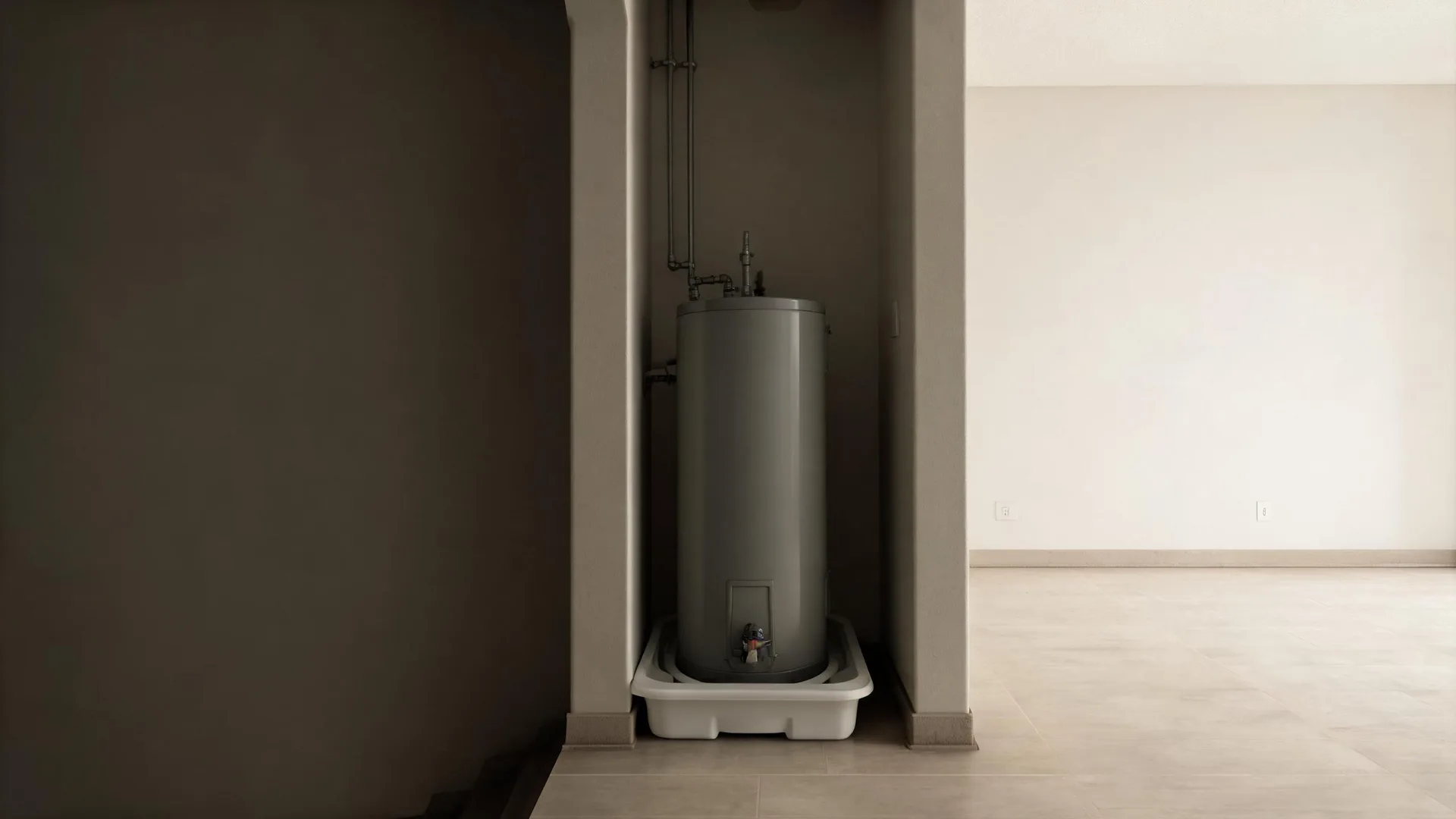
Gas-fired water heaters cycle their burners daily, year-round, and the ignition system, thermocouple, and gas valve accumulate wear in a way that electric resistance elements simply do not. Utility gas heats more occupied homes in Kent County, Rhode Island than any other fuel, at 50.4% (2020-2024 ACS 5-year). That fuel majority means most repair calls in this county land on gas equipment, so a contractor arriving at a Kent County home expects to check the burner orifice for fouling, test the thermocouple output, and inspect the flue connection before pricing any other work. A failed pilot or a degraded thermocouple reads as no hot water, which is the same symptom as a failed element or a tripped breaker, but the repair path is different and so is the part cost.
Water heaters installed in houses this old were sized and plumbed for equipment lines that have since been discontinued, redesigned, or replaced by incompatible successors. Half the homes in Kent County, Rhode Island were built in 1967 or earlier (2020-2024 ACS 5-year). When a contractor opens a unit and identifies what it needs, the next question is whether that part is still made, and if a substitute exists, whether it fits the existing connections without replanning the surrounding plumbing. That answer shapes the repair bill more than the failure itself does.
The Parts of a Water Heater a Contractor Checks During a Repair
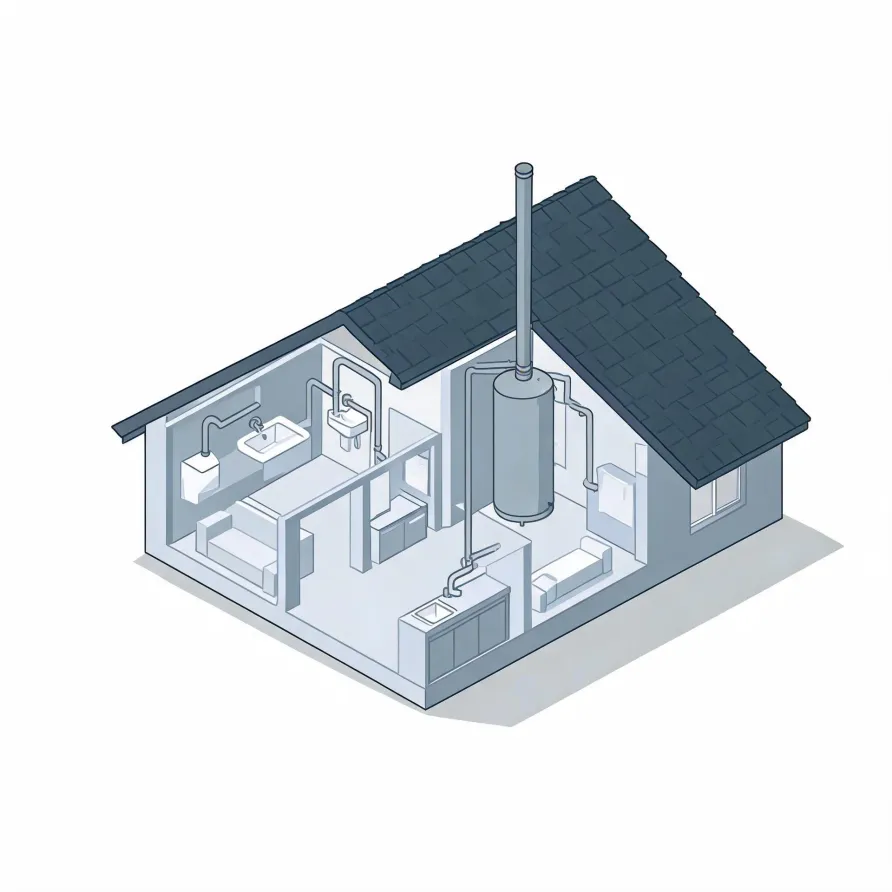
The tank is the piece most homeowners recognize: a tall cylinder that sits in a utility room, basement, or garage and holds a supply of heated water ready for use. The burner assembly or heating elements sit at the base or inside the tank and are where most repair calls begin, since a failure there means the water never gets hot.
The thermostat controls how hot the water gets and is mounted directly on the tank or on the heating element itself. The pressure relief valve sits on the side of the tank and is a safety device that a contractor will inspect any time the unit is misbehaving. The anode rod runs through the interior of the tank and slows corrosion from the inside out.
The drawing shows a general layout of a water heater system, and a licensed contractor determines which parts apply to the specific unit and installation in your home.
Get matched in Kent CountyKent County by the Numbers
146 severe weather events were recorded in Kent County, Rhode Island between 2015 and 2024.
NOAA National Centers for Environmental Information, Storm Events Database, bulk CSV export, events 2015-01-01 through 2024-12-31.Half the homes in Kent County, Rhode Island were built in 1967 or earlier (2020-2024 ACS 5-year).
U.S. Census Bureau, 2020-2024 American Community Survey 5-Year EstimatesKent County, Rhode Island holds 76,529 housing units (2020-2024 ACS 5-year).
U.S. Census Bureau, 2020-2024 American Community Survey 5-Year EstimatesOwners occupy 73.1% of the occupied homes in Kent County, Rhode Island (2020-2024 ACS 5-year).
U.S. Census Bureau, 2020-2024 American Community Survey 5-Year EstimatesCodes & Standards Behind Water Heater Repair in Kent County, Rhode Island2 sourced rules and standards
What Kent County, Rhode Island Requires for HVAC Repair
A Rhode Island master licensee needs no separate sheet metal licence while the air handling equipment is ten (10) tons or less, or the heating equipment does not exceed 250,000 BTUs; above either figure the sheet metal work must be subcontracted to a licensed sheet metal contractor.
Rhode Island requires a licence from the Department of Labor and Training to work in the mechanical trades: nobody may hold themselves out as a master, or advertise that they will install refrigeration and air conditioning or air distribution systems, without one.
Severe Weather Events in Kent County
Extreme weather puts real strain on water heaters, forcing them to work harder and wearing components down faster. How often that happens in Kent County shapes what local repair work looks like and how quickly problems tend to surface.
146 severe weather events, 2015–2024. Source: NOAA National Centers for Environmental Information, Storm Events Database.